Drift
A young man avoiding his grief is confronted by the ocean and pulled into an underworld version of his hometown of Tofino.
The film
A young man has lost his brother, and he is avoiding the grief so completely that the ocean itself confronts him and pulls him under, into an underworld version of his hometown: Tofino, British Columbia. The film started in two places at once. One was my love of Tofino and the wish to set a project there. The other was a conversation with someone who had just lost their partner. Grief is a hard subject, and for young men especially, emotions that have nowhere to go can become overwhelming. Drift is about what happens when avoidance stops being an option.
The pipeline
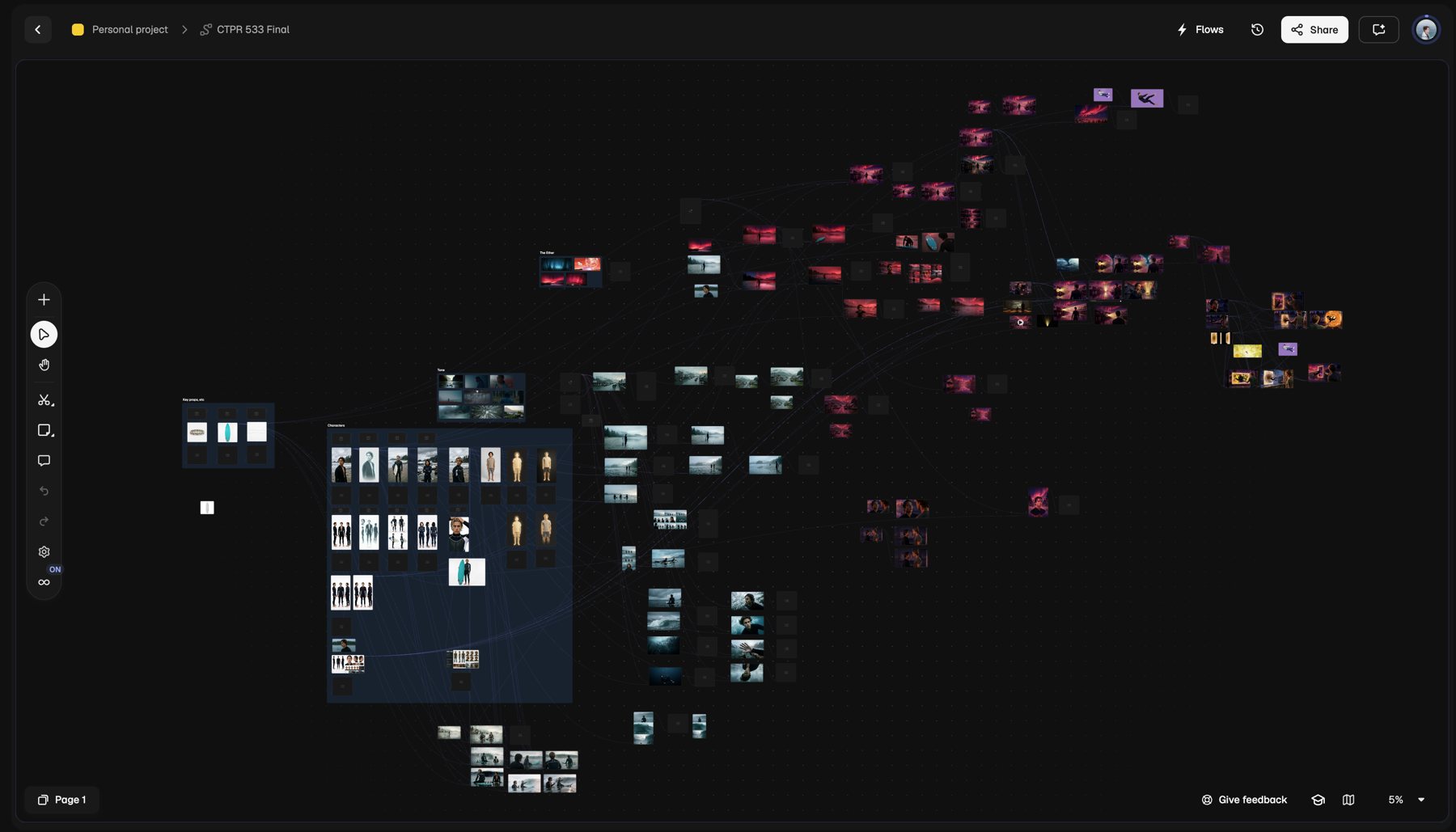
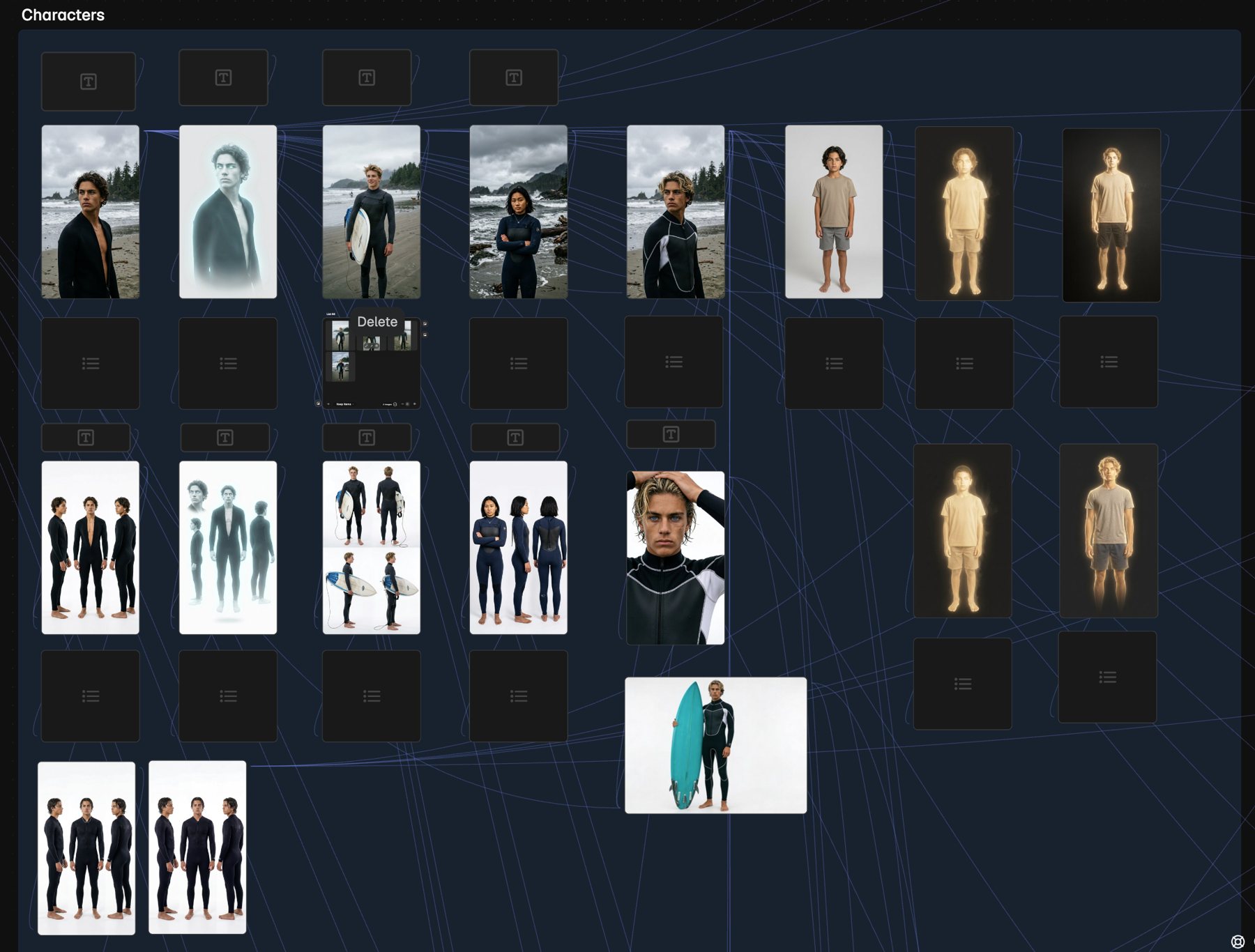
Home base was Magnific. We used its canvas tool to map the characters and key props, generating the anchor stills with Nano Banana until every scene had a visual source of truth. Those frames then went into the video engines: Kling and Seedance 2.0, chosen shot by shot depending on what each one does best. ChatGPT and Claude ran alongside as the production office, keeping the process organized. The edit came together in Premiere, and the score was generated with Suno.
Choosing engines like you choose lenses
The real education was learning what each engine is actually good for. Kling has remarkable emotional quality in its acting, but its lip sync falls apart. Seedance handles physics and scene geography far more reliably. So we cast them like department heads: Kling for performance, Seedance for the world. That is the directing job in this medium. The taste decisions do not go away; they move upstream into which tool gets which shot, and which of a hundred generations is the one with a performance in it.
The hard part
Two walls. The first was aesthetic: keeping an underworld consistent. When you combine supernatural elements with the geography of a real town, the engines want to drift back toward a generic normal world, and holding the look took constant reference discipline. The second was human: three people generating in parallel is chaos until you share a canvas. Moving the whole production onto a common Magnific board that everyone could access turned it from three solo experiments into an actual crew.
- Written byCharles Gunn
- Created byCharles Gunn, Anish Rajah, Samuel Yadidian
- ScoreGenerated with Suno